Stanley Banda, 27, from Traditional Authority (T/A) Maoni in Phalombe District has heard about “millions of dollars” and “rare earth minerals” buried in the bowels of Songwe Hill.
For nearly half his lifetime, he did not know that the hill that can be seen from his village was sitting on minerals that wealthy nations and industries need to power mobile phones, electric vehicles, computers and an array of electronics.
However, for the past 16 years, he has heard of ‘big money’ from the mine that remains held back by infrastructure gaps, permit delays and financing hurdles, yet he has not heard how the ‘big money’ will trickle to the community.
Malawi Environmental Protection Authority (Mepa) approved the environmental and social impact assessment (Esia) for Songwe Hill Rare Earth Project in 2023.
However, three years on, the mandatory report was approved the community does not know what it contains.
Songwe Mining Action Group leader Josta Namonde attributes the knowledge gap to language barriers.
“The mining development agreement and the Esia are written in English, which many people do not understand,” he says. “We have been advocating that the vital documents should be translated into local languages so that people should understand what is really at stake.”
The activist exposes a human side of Malawi’s push to boost earnings from its nascent but secretive extractive sector, including mining for rare earths—precious minerals critical for electric vehicles, wind turbines, computers and smartphones.
This is where the promise of a ‘green transition’ meets the reality on the ground as the country envisions mining contributing over 10 percent of its gross domestic product by 2030.
With global demand for rare earths projected to triple by 2035, Songwe Hill Rare Earth Project, which covers a 20 square kilometre spot across T/As Maoni, Nazombe and Kaduya is being positioned as Malawi’s first major rare earth mine.
However, residents in surrounding villages say that if this is the future, they need to have a better understanding on how this future is to be achieved.
Art and Global Health Centre Africa (ArtGlo) executive director Rodger Kumalile Phiri concurs that locals have a right to know.
According to the campaigner, the Songwe Hill Rare Earth’s Esia consultation record ‘appears thin’ given the scale of potential displacement the mining project will cause in the fertile farming area.
“The broader community feels left out in the Esia consultation, even those that were involved have limited understanding on what is contained in the approved Esia, some community members even feel the mining company ‘bribed’ stakeholders,” said Phiri in a phone interview.
The Malawi Mines and Minerals Act upholds international best practices, including the need for free, prior and informed consent as basic standards for projects that affect local communities.
“The laws provide for adequate compensation, and resettlement plans have to be approved,” says lawyer Kakekeni Kaphale.
While land acquisition is one of the most sensitive parts of any mine, Ufulu Wathu Community-based Organisation (CBO) programme coordinator Symon Thipa said for many families the project is not abstract.
The CBO works with ArtGlo to promote mining justice.
For generations, they have grown crops on the fertile land that is within the project’s infrastructure footprint.
The mining development agreement of the Songwe Hill mining project , which is expected to create 1200 direct jobs and 10 000 indirect jobs with anticipated revenue of $120.6 million (about K212 billion) per annum in form of royalties and dividends seems to be a highly guided document to the community.
However, Mkango Resources spokesperson Alex Lemon said the company conducted years of stakeholder engagement as part of the Esia consultation, meeting all Mepa requirements and rigorous international standards.
“Consultations ran from national level to the project area, with separate meetings for women and vulnerable groups and were done in the appropriate local languages,” he said in an email. “Mkango has a formal grievance system and remains committed to satisfying Malawian laws and regulations, as well as meeting rigorous international standards”.
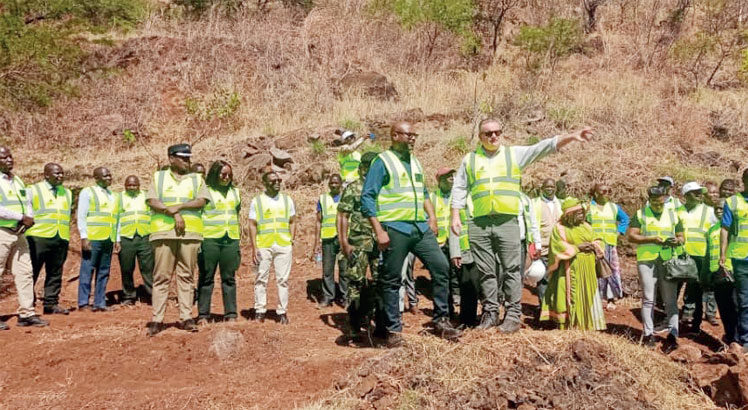
Recently, Minister of Mining Thoko Tembo visited the rare earth mines, describing the venture as one of Malawi’s most promising mining investments.
“As you are aware, there is a moratorium on the issuance of mining licences. The ministry is working hard to ensure the right regulations and legislation are in place so that both Government and mining investors are guided by the law,” he said.
With rare earth prices rising and the government pushing mining as the path out of the forex crisis, activists like Namonde are only asking for accountability to understand what is in it for them.
To the local voices, transparency in the extractive sector could help avert Malawi’s resource curse, the paradox where countries rich in non-renewable natural resources experience slower economic growth, poverty and instability instead of prosperity.